Sven Christian is a South African writer, editor, and curator. He is currently pursuing a PhD in Culture Studies at the Universidade Católica Portuguesa (Lisbon, Portugal) which focuses on the politics of silence. His research is supported by a scholarship from the Research Centre for Communication and Culture at the Faculty of Human Sciences.
Since 2022, Sven has served as Senior Curator of NIROX Sculpture Park and the Villa-Legodi Centre for Sculpture (Johannesburg, South Africa). Prior to that he served as Editor of Museum Publications, and Assistant Curator, at Zeitz Museum of Contemporary Art Africa (Zeitz MOCAA, 2017–18), as well as Assistant Editor at ART AFRICA magazine (2015–17) and founder of Ism-Skism (2013–14).
Sven is the editor of FORM Journal (Villa-Legodi Centre for Sculpture / University of Johannesburg Press), and a number of books and artist monographs, among them Johan Thom: Grasp (2025); Walter Oltmann: In Time (2024); and Ashraf Jamal’s Strange Cargo: Essays on Art (2022). He is also co-editor of Bruce Murray Arnott: Into the Megatext (2023); Coral Bijoux’s Dreams as R-evolution (2020); and William Kentridge’s Why Should I Hesitate: Putting Drawings to Work (2019). His writing has been published by Routledge, Phaidon, OnCurating, The Garage Journal, Ellipses: Journal of Creative Research, and The Thinker, amongst others. He holds an MA in Contemporary Curatorial Practices (University of the Witwatersrand, 2020) and a Bachelor of Fine Art (Rhodes University, 2011).
LATEST JOURNAL ARTICLE
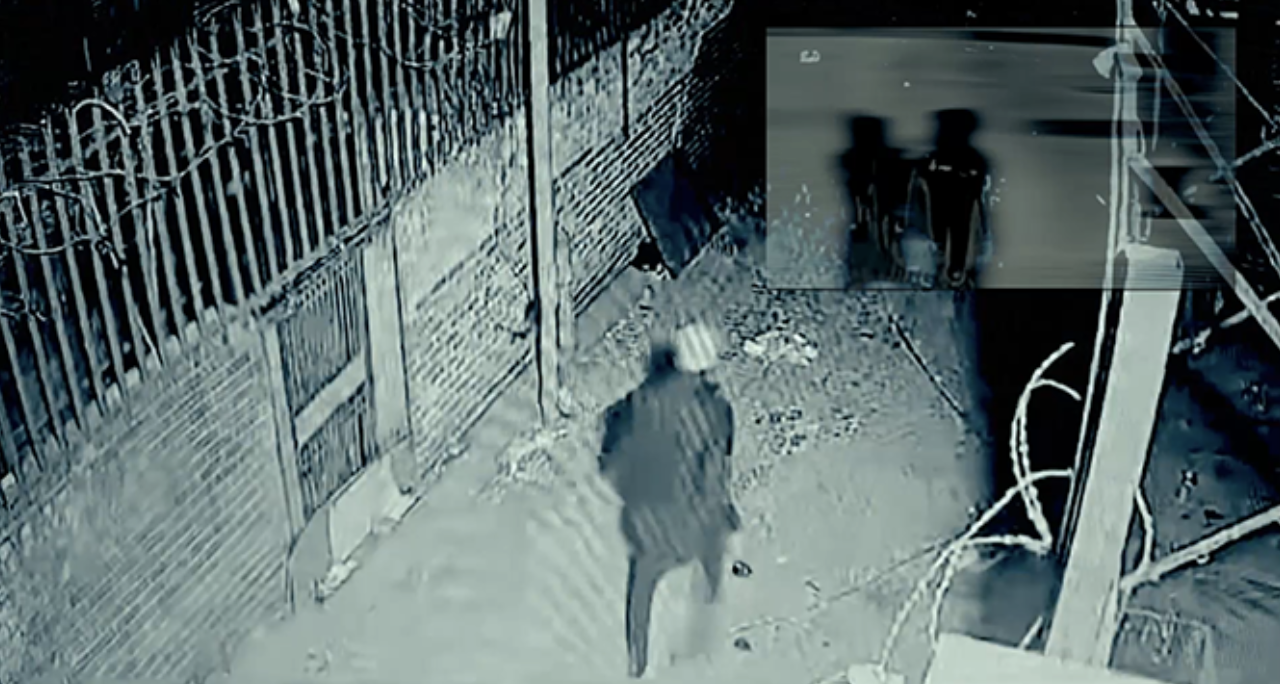
“Politics of the Night: Nocturnal Resistance and the Shadow Archive”
Stacy Hardy and Sven Christian
Citation: Stacy Hardy and Sven Christian. 2025. “Politics of the Night: Nocturnal Resistance and the Shadow Archive.” In Langtry, T. and Whitaker, C. and Marie, Z. (eds.). “Issue 5: Anarcho Aesthetics”. Ellipses: Journal of Creative Research (10 October).
At the height of Johannesburg’s load-shedding crisis in 2023, Imbewu Y’Ubumnyama — an enigmatic collective self-described as the “lunatic fringe” — surfaced briefly, only to disappear again into the shadows of the city’s nocturnal underbelly. Their ephemeral interventions — nocturnal poetry, distorted photocopied imagery placed under bridges, at nightclub entrances, and beyond the reach of daylight — sought to unmake the heliocentric and geocentric logics that underpin capitalist overexposure and the enforced packaging and linearity of urban existence. In their gestures, fragmented and fleeting, lies a provocation: to rethink the archive, the city, and the act of seeing.
The collective’s nocturnal methodology emerges from a longer history of resistance in South Africa, where night served as a sanctuary for those resisting apartheid’s brutal repression and censorship. Under the cover of darkness, movements, ideas, and art flourished — evading surveillance, silencing, and the violent imposition of order. Today, the nocturnal retains its potency as a method of subversion. Against the glare of a gated community or white cube, Imbewu Y’Ubumnyama gestures toward a “black box” — a space of accumulation, transformation, and opacity that resists the fixation of meaning, emerging in conversation with other works, viewers, and the shadows they inhabit.
Intended to unsettle the logic of preservation and permanence, this paper proposes a shadow archive that invites an aesthetic of disappearance. It insists that the trace is enough; the fragment whole. Drawing on Achille Mbembe’s “prolonged nocturn,” it considers the night as a revolutionary site where fear, secrecy, and monstrosity converge with desire and reinvention; the night, not as metaphor or manifestation, but “as method” — a radical praxis.
PROJECT SPOTLIGHT

“You wouldn’t know God if he spat in your eye”: Impressions from Dumile Feni’s Scroll
Contributors: Stacy Hardy, Kaushik Sunder Rajan, Atiyyah Khan, Phumlani Pikoli, Wairimu Murithi
Ellipses Journal of Creative Research, 24 April 2020
This project consists of a series of short stories. They are based on each author’s experience of Dumile Feni’s scroll, which spends most of its time wrapped in a padded box in Wits Art Museum’s (WAM) storeroom—a climate-controlled, access-only facility. The scroll's fragility and the need to preserve it have had a significant impact on how audiences get to experience it. In 2005, it was shown in a large vitrine as part of the Dumile Feni Retrospective at Johannesburg Art Gallery. In 2016, a digital translation was made for Activate/Captivate at WAM, which attempted to mirror the experience of handling the work without putting it at risk. By moving your hand across a sensor, visitors could ‘scroll’ backwards and forwards through the digital translation. Although Activate/Captivate aimed to make artworks in their collection more accessible (by finding alternative strategies of engagement), this drive also harbours its own assumptions about what accessibility means. Like the scroll’s exhibition in a vitrine, the digital translation privileges sight over other forms of sensory engagement, with the paper and dowels treated as a support for the drawings, rather than an integral part of the whole. In addition, many of its material, historical, and mechanical associations were lost, replaced with a tech-savvy vocabulary that changed how the artwork might be read. In some sense, this project can be seen as an attempt to grapple with the scroll's idiosyncrasies—its spillages and tensions, its ability to ravel and unravel, to expose and conceal, to oscillate between thick and thin, and to condense time. Although based on the scroll, these stories are not ‘about it’, per se. They are stories in their own right, based on a subjective experience and everything brought to it. They are not here to tell the story of the scroll, but to keep it company in absentia.
SELECT EXHIBITION

Beth Diane Armstrong, maquette for Surface Weight, 2014. Photo: Anthea Pokroy. Courtesy of the Villa-Legodi Centre for Sculpture.
Villa-Legodi Centre for Sculpture, 17 November 2024 – 15 March 2025
Small Things
Artists: Beth Diane Armstrong, Joni Brenner, Marco Cianfanelli, Richard John Forbes, Dean Hutton, Ebru Kurbak, Michele Mathison, Nandipha Mntambo, Farieda Nazier, Brett Rubin, and Sophia van Wyk.
Small Things includes a range of models, maquettes, experiments, and artworks which have led, or will lead, to largescale versions in the park. At the heart of the exhibition is a curiosity about how different artists approach the transition from a model or maquette to realising larger work. For example, how do artists visualise their ideas, make informed decisions about the kinds of materials they want to use, or test the structural integrity of their work? What sort of changes can one anticipate in the process, and how important is it for artists to remain responsive to the site or context of exhibition, especially when exhibiting outdoors, in a less controlled environment? How important is it today, with the advent of 3D digital technologies, to be able to experiment materially, and what sort of consequences might the use of such digital renders have on the physical outcome?
SELECT CONVERSATION

“Future Fables” / Vibha Galhotra
This conversation took place at NIROX Sculpture Park, during Galhotra’s residency (1 – 17 October 2024). Earlier that year, Galhotra realised the first iteration of Future Fables (2024), an an architectonic sculpture with sound. Its installation at NIROX Sculpture Park is supported by RMZ Foundation, and created in partnership with Nature Morte, with a supporting talks programme held in partnership with Goodman Gallery, Johannesburg. The first iteration of the work was installed on 27 January 2024 at Vis A Vis India/STIR in New Delhi. Now in its second iteration, Future Fables is the latest in Galhotra’s expansive artistic repertoire, spanning sculptures, installations, photographs, videos, site-specific works, and public art interventions that engage with the dynamic shifts in our world; shifts that are driven by climate change, consumerism, capitalism, and globalisation. The conversation was intended to shed some light on the making of Future Fables at NIROX, to contextualise this work within the broader context of Galhotra’s oeuvre, and to also discuss the realisation of a separate, site-specific installation titled Who Owns the Air? (2024).
To read the conversation, click here.

RESEARCH PROJECTS

RESIDENCY EXHIBITIONS

WRITING

EDITING

CONVERSATIONS